


Perennial Wisdom - Gardening Safety in the Face of Wildfires
August 12, 2026
By:
Christine Gile, WSU Extension Master Gardener, Stevens County
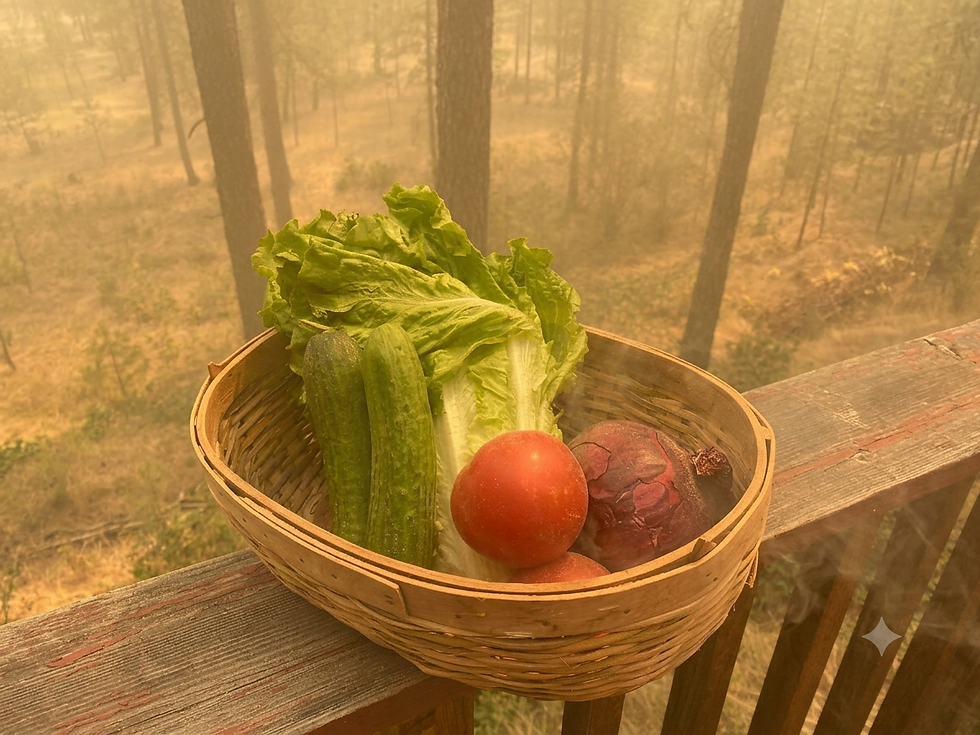
Be sure to thoroughly clean produce exposed to wildfire smoke. Photo courtesy Kathy Hansen.
Wildfires are a regular occurrence in Washington state, with approximately 900 wildfires a year, from May through October. Wildfire smoke can be an unavoidable nuisance, and while burning forests may carry less of a risk, fires in residential, industrial, or farming areas can create smoke with hazardous contaminants. Hydrocarbons, heavy metals, and chemicals can be present in the smoke from burned items such as buildings, farm equipment, and roads. These contaminants can travel long distances and can become a serious health hazard. Here are some tips from Washington State University Master Gardeners to keep you safe while working in your garden and eating its harvested produce:
Protect Yourself. Inhaling wildfire smoke is the biggest risk. When the air quality reaches unhealthy levels, stay inside whenever possible and wear a respirator mask outdoors. N95 masks are typically the minimum protection recommended, with a P100 giving greater protection; surgical masks are insufficient. Long sleeves, pants, gloves, hat, and closed-toe shoes may also help protect your skin against ash. Master Gardeners suggest washing your hands and face with soap and water after working in an area that may have smoke contaminants.
Keep the Outdoors Outside. Take off your shoes before coming inside your house and use a boot brush to clean your shoes. Master Gardeners also recommend changing into clean clothes inside, putting dirty clothes into a bag, and washing them as soon as possible to prevent tracking contaminants into your house. Regularly cleaning areas where dust accumulates can also help.
Spray Plants and Produce. To avoid stirring up ash in your garden, do not use a leaf blower to clean it off. A gentle spray of water from a hose can wash ash off growing edible plants. Use it again as a pre-rinse for produce before bringing it inside. Thoroughly washing produce should remove any residues, according to Master Gardeners, since smoke and ash are unlikely to penetrate deeply into the fruit or vegetable. You should wash your produce well one to two more times after the initial outside rinse before eating it. Soaking your produce in a 10% white vinegar solution can help lift soil particles off leafy green vegetables and hairy fruits. It can also help to remove outer leaves and peel produce before eating. Use your best judgment, and if you question the safety, then just throw it out.
Maintain Soil Health. Soil may contain contaminants from the fallen ash or previous fires. Sheet mulching and raised beds can prevent soil from blowing. Prevent soil from splashing up onto crops by using subsurface irrigation and different types of barriers, such as straw or weed cloth. According to Master Gardeners, adding compost and “clean” soil to your garden beds can help dilute contaminants. Consider having your soil tested for contaminants.
More resources on this topic can be found at extension.wsu.edu/stevens/gardening/general-gardening-information.