


Perennial Wisdom - Getting Started With Worm Composting
June 17, 2026
By:
Linda Cox, WSU Stevens County Master Gardener Volunteer
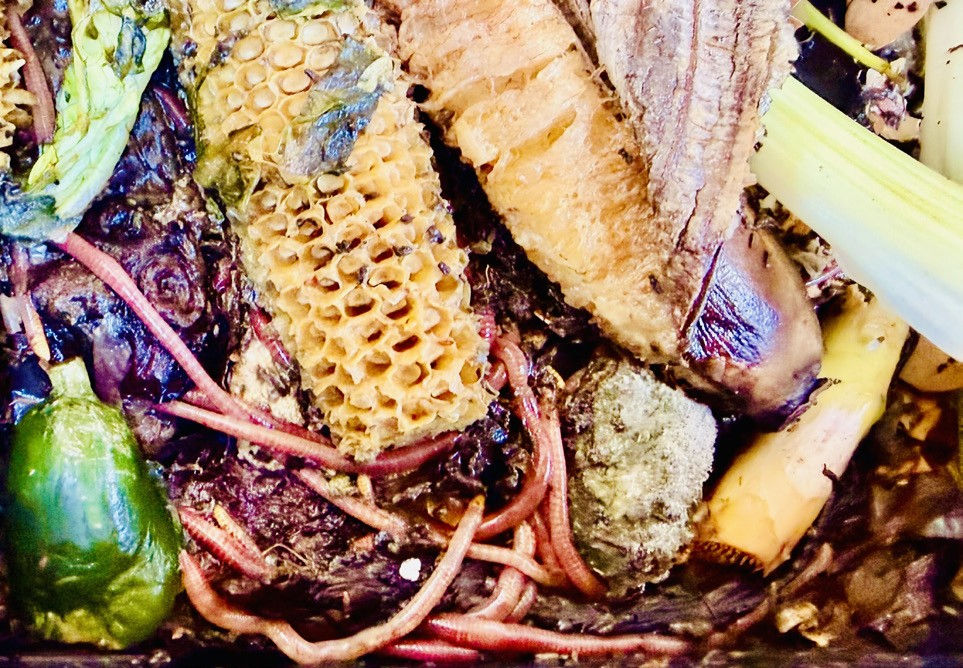
Worms consuming kitchen scraps in a vermiculture setup. Photo courtesy Linda J. Teller.
Imagine transforming your kitchen scraps into nutrient-rich compost without the smell – boosting plant and soil health while reducing landfill waste. This process is made possible by the worm.
The Value of Worm Composting
Unlike traditional composting, which typically relies on bacteria and fungi, vermicomposting uses worms and is commonly known as “worm composting.” Worms can recycle organic waste through their digestive systems and produce castings – worm manure – of- ten called “black gold.” These castings are rich in nutrients that can improve soil structure, enhance drainage, and increase the nutrients available to plants. Many gardeners consider vermicompost one of the best all-natural ways to provide quality nutrition for soil and plants.
Getting Started
A home worm composting system usually requires a container, moist bedding, redworms, and food scraps. Plastic totes with tight-fitting lids can make a sturdy, in- expensive choice for a worm bin. Bedding can be made by shredding newspaper and cardboard, and mixing with water until it feels like a damp sponge – moist, not dripping. Squeeze out excess water and fluff as you add it to the container. If bedding gets dry, spray with water and then fluff.
Choose the Right Worms
According to Washington State University Master Gardeners, red wigglers are the best for composting, and can be purchased online or from local suppliers. Make sure they are selling the correct species – Eisenia fetida. Master Gardeners recommend avoiding “red mix” blends, which may contain worms unsuited for bin life. The number of worms you need can depend on the size of the composting bin and how much food waste your household produces in a week. The standard recommendation is one pound (roughly 1,000 worms) of red wigglers for every square foot of your worm bin’s surface area to establish a sustainable system.
Feeding Instructions for Worms
Master Gardeners suggest gently placing the worms on top of the bedding where they can burrow underneath. Allow a few hours for them to settle in, then add food scraps by burying them 2 to 3 inches under the bedding in different locations. Feed two to three times a week. Yes, to fruits, veggies, eggshells (crushed), coffee grinds/coffee filters, dried leaves, garden waste. Master Gardeners recommend not adding dairy products, meat scraps, fish, greasy or oily food, onions, garlic, fat, citrus, pet or human manure.
Harvesting
It may take six to eight weeks to produce a reasonable amount of compost. Several methods exist for harvesting finished compost; one example is to stop feeding for one to two weeks, then push contents to one side. Add fresh bedding and food to the empty side. The worms will migrate within weeks, allowing harvest of finished compost.
Avoiding Worm Bin Problems
Master Gardeners recommend burying food scraps under the bedding to avoid fruit flies and note that adding too much food can lead to rotting and bad odors. Excess moisture may cause bedding to become compacted and smelly.
Uses
Vermicompost can be mixed into garden beds and potting soil. Master Gardeners suggest sprinkling on the soil surface around plants for a slow release of nutrients and using compost tea as a liquid fertilizer. Resources: Find resources for this and more gardening columns at extension.wsu.edu/stevens/gardening/general-gardening-information.
The WSU Extension Master Gardener Program trains volunteers to be effective community educators in gardening and environmental stewardship. Master Gardeners provide information generated from research at WSU and other university systems. Linda Cox lives in the Deer Park area and enjoys gardening and photography. Visit us and bring your questions to the Chewelah Farmers Market, Fridays, 11 a.m. to 3 p.m., and the Colville Farmers Market, Saturdays, 9 a.m. to 1 p.m. Both run May-Oct.